


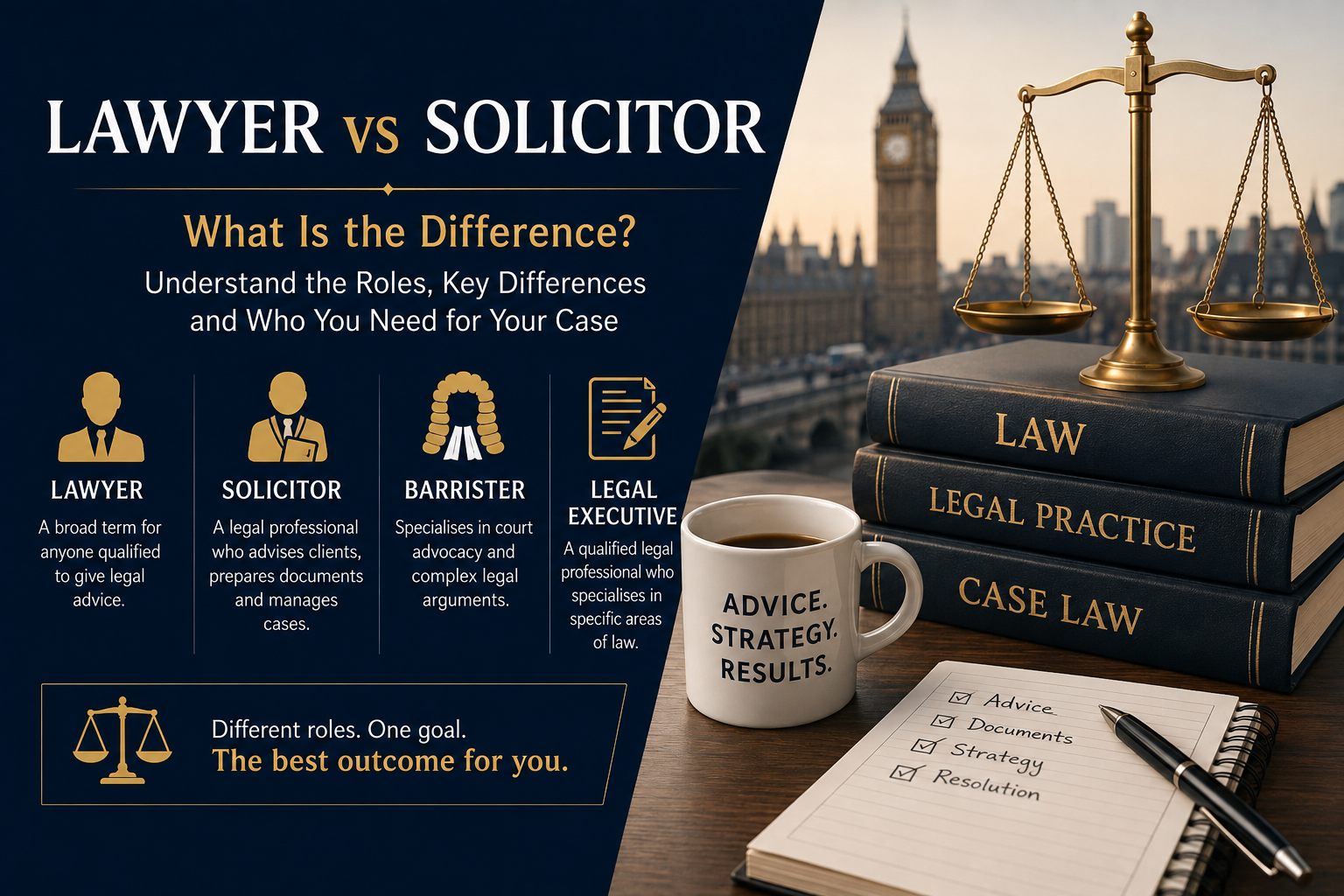
A lawyer is a broad term for anyone trained and licensed to give legal advice. A solicitor is a specific type of lawyer who deals with you directly, advises you, and manages your case from start to finish. So while people often use the terms interchangeably, the solicitor vs lawyer distinction matters once you’re deciding who to approach.
Is a Solicitor the Same as a Lawyer?
No, a solicitor is not the same as a lawyer, but it falls within that category.
A lawyer is an umbrella term. It covers solicitors, barristers, and other legal professionals. In the UK, the person you will usually instruct is a solicitor. In other countries, “lawyer” is simply the word used to describe that same role.
So when people ask “is solicitor same as lawyer,” what they’re really asking is whether the roles are interchangeable in practice. They’re not. A solicitor is a defined, regulated professional who deals directly with clients and takes responsibility for their matter.
That distinction becomes important once you need advice that leads to action, not just an explanation.
Solicitor vs Lawyer: Key Differences at a Glance
The lawyer or solicitor difference isn’t about hierarchy, it’s about function.
A lawyer is a general description. It tells you someone has legal training, but not how they work or whether they’ll handle your matter directly.
A solicitor, by contrast, is a regulated legal professional who works with clients day to day. They advise, prepare documents, and manage cases from beginning to end.
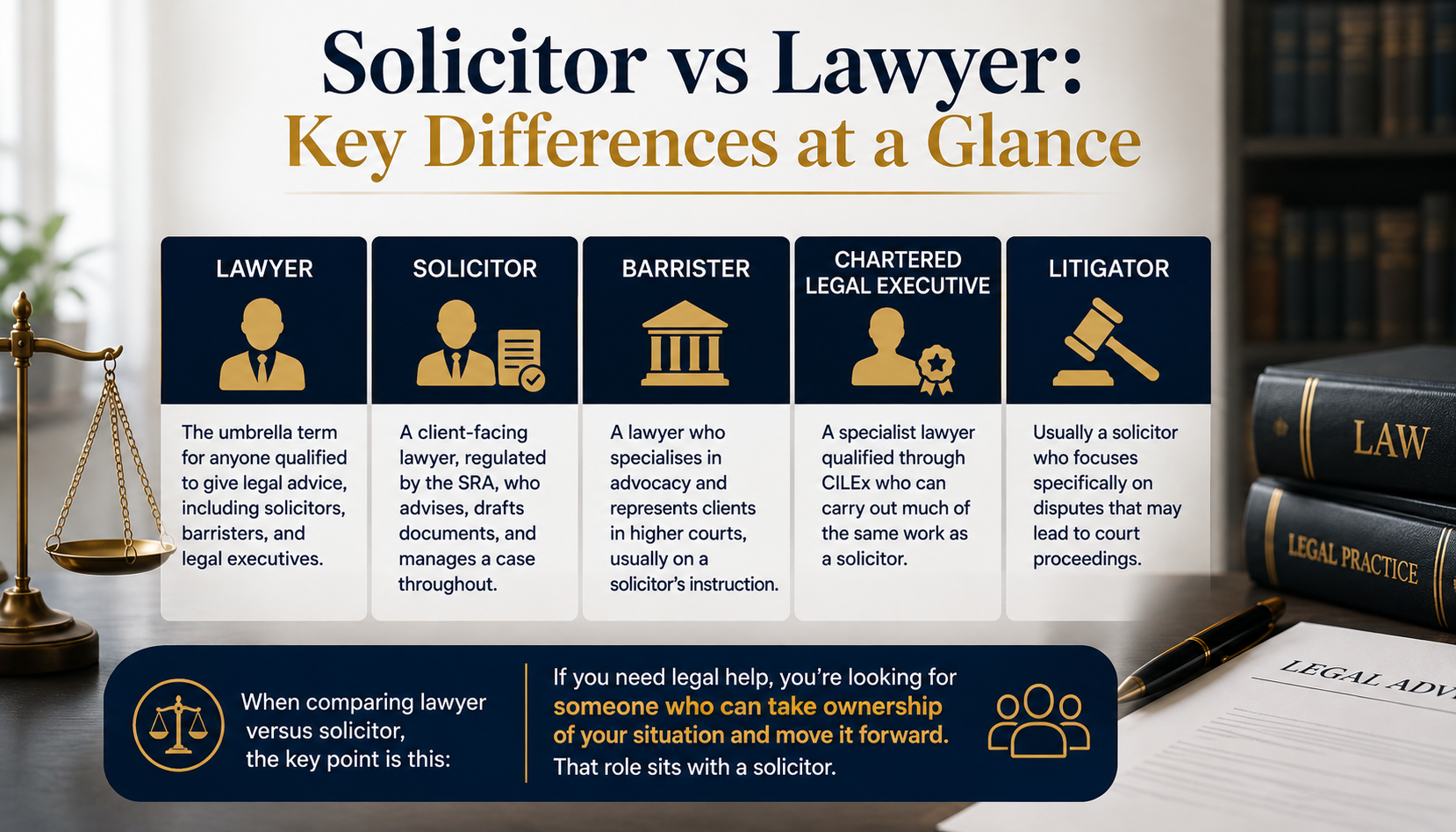
Here’s how the main legal roles in the UK compare at a glance:
- Lawyer — the umbrella term for anyone qualified to give legal advice, including solicitors, barristers, and legal executives.
- Solicitor — a client-facing lawyer, regulated by the SRA, who advises, drafts documents, and manages a case throughout.
- Barrister — a lawyer who specialises in advocacy and represents clients in higher courts, usually on a solicitor’s instruction.
- Chartered Legal Executive — a specialist lawyer qualified through CILEx who can carry out much of the same work as a solicitor.
- Litigator — usually a solicitor who focuses specifically on disputes that may lead to court proceedings.
When comparing lawyer versus solicitor, the key point is this: if you need legal help, you’re looking for someone who can take ownership of your situation and move it forward. That role sits with a solicitor.
What Does a Solicitor Actually Do?
A solicitor advises clients, handles legal work, and progresses matters from start to finish.
In practice, this varies depending on the area of law, and most solicitors specialise rather than working across everything.
Property and Conveyancing
In property matters, solicitors handle conveyancing and commercial and residential leases, making sure transactions are completed correctly.
Family Law
In family law, they advise on divorce, financial arrangements, and matters involving children — an area our family law team handles, where a steady and structured approach is important.
Employment Law
In employment matters, they deal with dismissals, disputes, and settlement agreements — often working within or alongside an employment law firm in London, where early advice can change the direction of a case.
Wills and Probate
In wills and probate, they assist with estate planning and administration.
Civil Disputes
In disputes, they act as civil litigation solicitors in London, managing claims, negotiations, and court proceedings where required.
In firms where the work is handled directly by a senior solicitor, there is often more continuity in how matters are managed. That tends to keep things clearer and more efficient for the client.
Also Read: Prenuptial and Postnuptial Agreements
What is a Barrister and How Are They Different?
A barrister is a lawyer who specialises in court advocacy and complex legal arguments.
Traditionally, a solicitor prepares the case and instructs a barrister to represent the client in higher courts. Barristers focus on presenting arguments, handling hearings, and advising on technical points of law.
That structure still applies, although some solicitors now qualify as solicitor-advocates and can represent clients in higher courts themselves.
In most cases, you would not approach a barrister directly. A solicitor will assess your situation and decide whether specialist advocacy is required, ensuring the case is handled in a coordinated way rather than fragmented between different professionals.
What is a Legal Executive and Where Do They Fit?
A Chartered Legal Executive is a qualified legal professional who specialises in a specific area of law.
They follow a different qualification route through CILEx but can carry out many of the same tasks as solicitors, including advising clients and managing cases.
In certain situations, they can offer a more cost-effective option, particularly for defined pieces of work. They form part of the wider group of legal advisors, often working within law firms alongside solicitors to support different aspects of a case.
What is a Litigator?
A litigator is a lawyer who specialises in disputes that may lead to court proceedings.
To answer “what is a litigator lawyer” directly: it is typically a solicitor who handles disputes, manages claims, and represents clients through the litigation process.
This includes matters such as contract and commercial law disputes, debt recovery, and business disagreements. Where disputes cannot be resolved early, litigators take structured steps toward formal proceedings.
Working with experienced civil litigation solicitors often means the focus is not just on court action, but on resolving disputes efficiently where possible, and escalating only when necessary.
Also Read: The Litigation Mindset: How a Senior Advocate Prepares a Case Before Proceedings Even Begin
Lawyer or Solicitor. Who Do You Actually Need?
The question is not just lawyer or solicitor, but which type of solicitor is right for your situation.
- If you are buying a property, you need a conveyancing solicitor.
- If you are dealing with a workplace issue or dismissal, you need an employment solicitor.
- If you are involved in a dispute, you need a civil litigation solicitor.
- If you are planning your estate, you need a wills and probate solicitor.
In most cases, a solicitor will be your first point of contact. If the matter becomes more complex or moves to court, they may bring in a barrister where appropriate.
Choosing the right solicitor early tends to avoid delays and unnecessary complications later on.
Also Read: Employment Law Advice for Employees in London: What You Need to Know
How to Find the Right Solicitor in London For You
Finding the right solicitor is less about size and more about relevance and approach.
Start by checking that the solicitor is regulated by the Solicitors Regulation Authority (SRA) — every regulated firm has an SRA number you can look up. Then look at their area of focus. Most solicitors specialise, and experience in your specific issue matters.
Many law firms in London offer an initial enquiry, which gives you a chance to understand your position before committing. In our experience, this first conversation is usually enough to show you how clearly things are explained and how your matter is likely to be handled.
Some firms operate with multiple layers of staff. Others offer a more direct approach, where you deal with one solicitor throughout.
At KSC Legal, matters are handled personally by a senior solicitor, which allows for clearer advice and quicker decisions, particularly in situations where timing matters.
Also Read: How Much Does a Solicitor Cost | UK Legal Fees Guide