



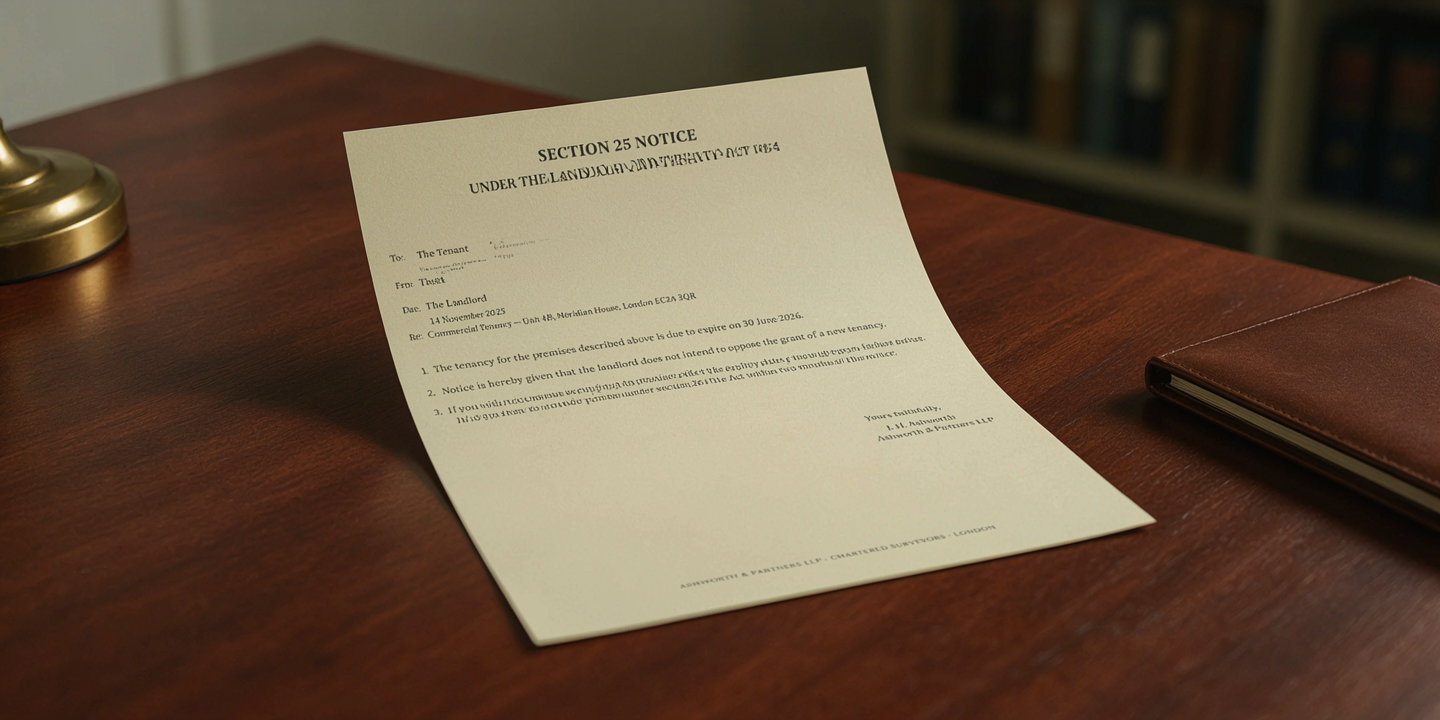
Receiving a Section 25 notice can be unsettling for any commercial tenant. It often arrives without warning and immediately raises questions about whether the business can stay, whether the lease will be renewed and what steps need to be taken next. The notice may propose new terms or may state that the landlord intends to end the tenancy altogether.
Senior solicitor Kuldeep S. Clair advises tenants on Section 25 notices with clear, calm and commercially focused guidance. Understanding the notice and responding correctly is essential to protecting your position.
What Is a Section 25 Notice?
A Section 25 notice is a formal notice served by a landlord under the Landlord and Tenant Act 1954. It is used either to propose new terms for a lease renewal or to bring the tenancy to an end. The notice must specify whether the landlord is willing to grant a new lease or whether they oppose renewal.
If the landlord is willing to renew, the notice will set out proposed terms such as rent, length of term and repairing obligations. If the landlord opposes renewal, the notice must state the statutory grounds on which the landlord relies.
Renewal or Termination – Understanding the Difference
A Section 25 notice does not automatically mean the tenant must leave. If the landlord is proposing renewal, the notice simply begins the negotiation process. Even if the landlord opposes renewal, the tenant may still have rights to challenge the landlord’s position depending on the grounds relied upon.
The key is to understand whether the notice is a renewal notice or a termination notice and to respond appropriately.
Deadlines and Timing
Section 25 notices contain strict deadlines. The notice must give between six and twelve months’ notice, and tenants must take action within the statutory timeframe to protect their rights. Failure to respond correctly can result in the tenant losing the right to apply for a new lease. Kuldeep ensures that deadlines are properly managed and that the tenant’s position is protected throughout the process.
Negotiating New Lease Terms
If the landlord is willing to grant a new lease, the Section 25 notice will set out proposed terms. These terms are not final. They are simply the landlord’s opening position. Rent, length of term, break clauses, repairing obligations, service charges and other provisions can all be negotiated.
Kuldeep assists tenants in negotiating terms that are commercially realistic and protect the business. His approach is calm, senior and focused on achieving a workable agreement.
When the Landlord Opposes Renewal
If the landlord opposes renewal, the notice must state one or more statutory grounds. These may include redevelopment, landlord occupation, persistent delay in paying rent or other specific grounds set out in the Act.
Some grounds are difficult for landlords to prove. Others may be open to negotiation. Kuldeep advises tenants on the strength of the landlord’s position and the options available, including challenging the notice or negotiating an alternative arrangement.
Court Applications and Protecting Your Rights
If agreement cannot be reached, the tenant may need to apply to court to protect their right to a new lease. This does not necessarily mean the matter will proceed to a full hearing. Many cases settle after the application is issued.
Kuldeep provides clear guidance on when an application is necessary and how best to approach the process.
Costs and Practical Expectations
Legal costs depend on how far the matter progresses. A straightforward negotiation may be resolved quickly, whereas disputes over renewal terms or opposition grounds may require more detailed involvement.
Kuldeep does not normally work on an open hourly-rate basis for commercial lease matters. Instead, he prefers to agree a fixed fee for a defined amount of work so that tenants have clarity from the outset. The difficulty with offering a single fixed fee for the entire Section 25 process is that no solicitor can predict how the landlord will respond, whether terms will be negotiated sensibly or whether further steps will be required. For that reason, Kuldeep provides clear, honest guidance at the beginning and agrees fixed fees for each stage of work as needed, ensuring costs remain controlled and transparent.
For tenants with limited budgets, Kuldeep can also assist with specific stages of the process rather than full representation throughout. This may include reviewing the notice, advising on negotiation strategy, preparing correspondence or dealing with particular points. In these situations, he is able to quote a fixed fee for the defined work required. This flexible approach allows tenants to obtain senior legal support where it is most needed without committing to the cost of full proceedings.
Why Early Advice Matters
Section 25 notices involve strict deadlines and can have significant consequences for the future of the business. Early advice ensures that the tenant’s rights are protected, negotiations are handled sensibly and the business is not placed at unnecessary risk.
Kuldeep’s approach is calm, senior and commercially grounded. He helps tenants understand their position clearly and negotiate practical outcomes.
A Senior, Practical Solicitor’s Approach to Section 25 Notices
Section 25 notices can feel daunting, especially when the future of the business depends on the outcome. Working with senior solicitor Kuldeep S. Clair gives you clear advice, strong negotiation and practical support tailored to your circumstances.
If you have received a Section 25 notice or expect one soon, Kuldeep can advise you quickly and confidentially and help you understand the most sensible way forward.